Dallas freeways move more than a million vehicles a day, and when yours stops moving, everything around it does not. The shoulder narrows, traffic does not slow, and every decision you make in the next few minutes carries real consequences. Most guides on this subject are written for generic American highways. This one is written for I-635, I-35E, US-75, and the specific conditions that make a Dallas freeway breakdown different from pulling over on a neighborhood street - including a free government response program most local drivers have never heard of, legal rights that most tow operators won't mention, and location techniques that can cut dispatch time on Dallas's sprawling interchanges.
Why a Dallas Freeway Breakdown Is More Dangerous Than a Neighborhood Breakdown
TxDOT's Crash Records Information System recorded more than 31,000 total crashes across Dallas in 2023, with over 200 fatalities in 2024. Those numbers reflect decades of traffic growth on highway infrastructure that was never designed to carry this volume. When a vehicle stops on the shoulder of I-635 or I-35E, it becomes an obstacle in a stream moving at highway speed - a stream that has very little margin to adjust.
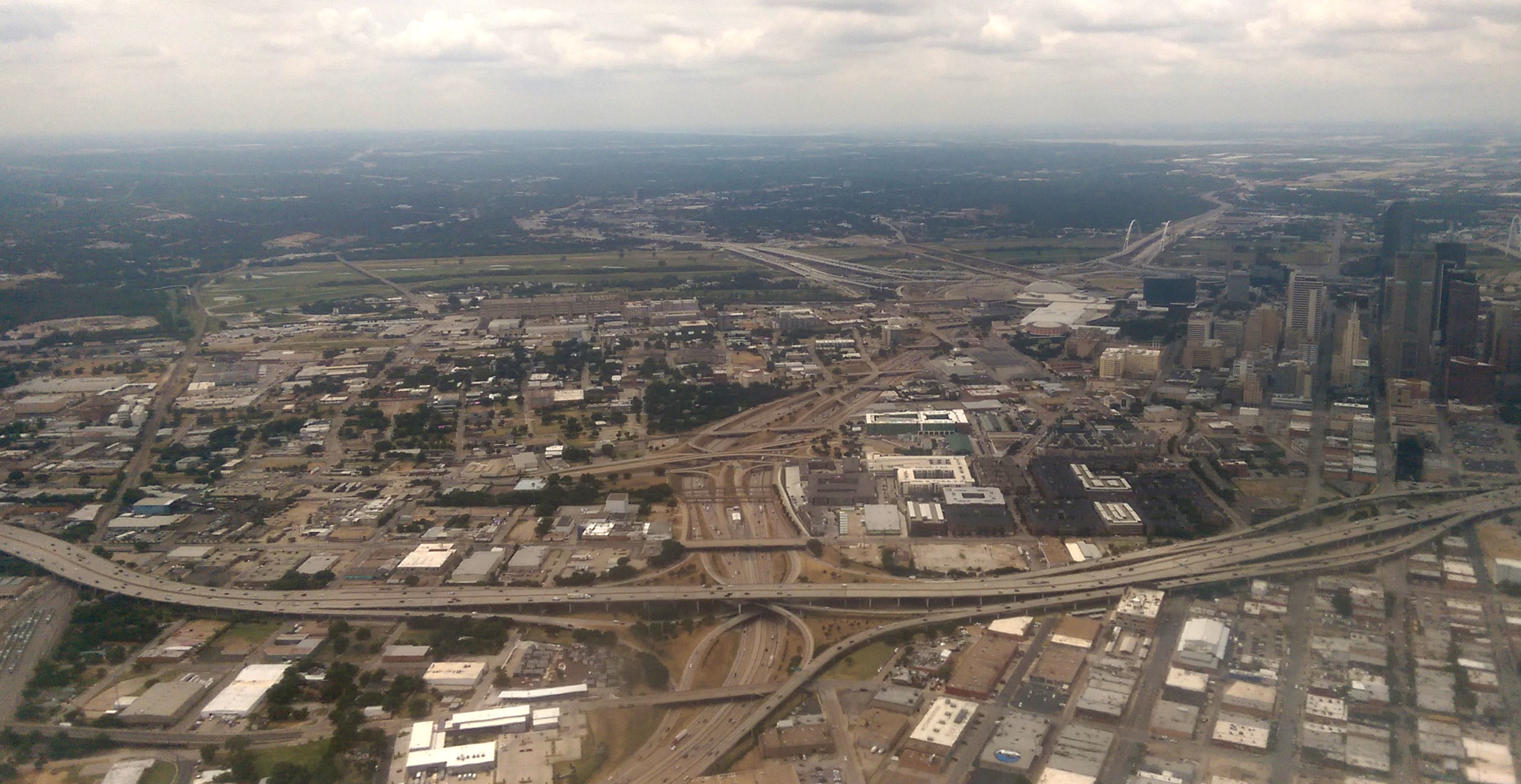
The statistics at specific corridors are striking. The intersection of I-635 at Skillman Street averages around 256 crashes per year - the single most dangerous intersection in Dallas. The I-635 corridor as a whole sees dense, repeated crash clusters. I-35E through downtown Dallas is one of the highest crash-volume highway segments in the entire state, driven in part by constant lane-merge conflicts near its junction with I-30. A stopped vehicle on either road is not sitting in abstract statistical danger; it is sitting in a location where crashes happen on a near-daily basis.
The LBJ TEXpress managed lanes on I-635 introduce a hazard specific to Dallas that most generic roadside guides ignore entirely. In multiple segments, those lanes have reduced or fully eliminated paved shoulders. If your vehicle stops in a managed lane during peak hours, there may be nowhere to pull over. You are not in a bad parking spot - you are in an active travel lane with no exit that doesn't involve a tow.
Distracted driving crashes across Texas totaled nearly 85,000 in 2023, killing more than 400 people statewide. That background rate means every minute you spend on a freeway shoulder is exposure to a driver whose eyes are somewhere other than the road ahead. Secondary crashes - a moving vehicle striking a stopped one on the shoulder - are not rare. Dallas summers compound the mechanical risks, too. Temperatures that routinely push into triple digits accelerate the chemical breakdown inside car batteries and stress tires that may already be near the end of their life. July through September is peak breakdown season on these roads, and the heat itself is part of the hazard.
The First 90 Seconds: Steering to the Shoulder Without Creating a Second Crash
The most common instinct when something goes wrong at highway speed is to brake hard. That instinct is almost always counterproductive. Hard braking on a freeway surprises the driver behind you and can trigger a rear-end collision before your car is even stopped. The correct sequence is: signal right immediately, then coast toward the shoulder and let the car's momentum carry it clear of the travel lanes.
If you have a blowout, the steering reaction matters. Keep both hands firm on the wheel and ease right gradually. Sudden overcorrection at highway speed - the impulse to yank the wheel - is more dangerous than the blowout itself. Slow, controlled movement toward the shoulder is the goal.
Where to stop is its own decision. On a standard divided highway like I-35E or US-75, the right shoulder is always correct. Pull as far right as possible - your vehicle's right-side wheels should ideally be off the pavement entirely, well past the white fog line. On I-635 managed-lane segments where a shoulder does not exist, your goal shifts to reaching the next exit under whatever power you still have. If the car will not move at all in one of those lanes, hazard lights go on before anything else, and 911 is the first call.
Once stopped on a shoulder, turn on hazard lights before you open a door or pick up your phone. If you carry reflective triangles - most drivers do not, which is a real gap worth fixing - place them behind the vehicle at intervals to give approaching traffic advance warning. The further back you can put them, the more time approaching drivers have to react.
Stay In the Car or Get Out? Making the Right Call on a Dallas Freeway Shoulder
Stay in the car, seat belt on. That is the default answer, and it holds in the vast majority of situations. Modern vehicles are built with crumple zones and high-strength steel precisely because occupants inside a struck vehicle survive at far higher rates than people standing near one. The shoulder of a Dallas freeway is not a safe place to stand. The most dangerous position of all is directly behind your vehicle - a rear-end strike at speed can push the car into anyone standing there in an instant.
The exception is clear: if your car is on fire, or if you smell fuel and fear ignition, get out immediately. Move away from the vehicle toward the guardrail or concrete barrier wall - not into traffic. If you are on a bridge or overpass with no barrier structure, staying inside may still be safer than standing exposed to the drop or to traffic.
If you do exit under any circumstance, do it from the passenger side. Stay close to the barrier or guardrail, facing oncoming traffic so you can see what is approaching. Keep as much of the vehicle's body between yourself and the travel lanes as possible. Bright clothing or a reflective vest makes a real difference. Do not stand behind the car, do not crouch next to the rear bumper, and do not attempt roadside repairs from the traffic-side of the vehicle.
Children and pets complicate this calculation. If you have genuine reason to believe the vehicle may be struck - a truck bearing down, a particularly exposed position - bring everyone out the passenger side and hold them against the barrier well clear of the travel lanes. Keep the group together and stay off your phone until everyone is positioned safely.
TxDOT HERO Trucks: Free Roadside Help Patrolling Dallas's Biggest Interstates
The TxDOT Highway Emergency Response Operator program - HERO, for short - deploys white patrol trucks on six major Dallas-area corridors at no charge to drivers. The covered freeways are I-35E, I-30, US-75 (Central Expressway), I-635/LBJ, the Dallas North Tollway, and I-20 within the metro area. Most Dallas drivers have never heard of this program. On the right road at the right time, it can handle your situation for free.
HERO operators are trained roadside responders, not mechanics. What they can do is specific:
- Push your stalled vehicle to the nearest safe exit or ramp
- Provide a small amount of fuel if you have run dry
- Change a flat tire if you have a spare available
- Assist with traffic control around your stopped vehicle
What they cannot do is just as important to understand. HERO operators do not replace batteries. They do not perform mechanical repairs of any kind. They do not respond to vehicles in parking lots or residential streets - their territory is the freeway corridor only.
Response times on covered corridors are typically fast when patrols are running. That response window is the reason to wait before immediately calling a private tow company. If you break down on one of the six corridors, give it several minutes. A HERO truck may already be headed to your location, and a free resolution beats a tow bill.
The critical limitation is hours. HERO patrols operate primarily during weekday peak periods and some weekend hours. The program is not active around the clock. A breakdown late at night, on a weekend evening, or on any corridor not included in the six listed above means HERO is not an option. In those situations, call a private tow company from the start rather than waiting for a truck that will not come.
How to Give Your Exact Location When You Call for Help
On Dallas's sprawling interchanges, "I'm on I-635" tells a dispatcher almost nothing. I-635 runs through Garland, Dallas, Farmers Branch, and multiple unincorporated areas - a single call that vague can easily add 15 minutes to response time while the truck circles the wrong interchange. Precision here is practical, not pedantic.
Mile markers are your best tool. Small green signs appear along the right shoulder, typically every tenth of a mile, stamped with a number that corresponds to your distance from the freeway's origin point. Find the most recent one you passed and give that number to the dispatcher. It is the single most actionable piece of location information you can provide on a Texas freeway.
Exit numbers work similarly. Texas freeways number their exits to match mile markers, so "just past exit 43" is a meaningful data point for any dispatcher familiar with the corridor. Cross-street overpasses are a useful backup - if you can read the street name on the overpass above or behind you, that narrows your location to within a block or two for someone who knows the road.
If it is dark, if you have passed no visible markers, or if your adrenaline has wiped out the last several landmarks you drove through, use your phone. Open your maps application and drop a pin at your current GPS location. Share that pin by text to a friend, family member, or the tow company's messaging option if one is available. Many callers know they are somewhere on I-35E but have no idea which mile of it they occupy. A GPS pin resolves that immediately.
When you call, give the dispatcher four things in order: the freeway name, your direction of travel, the nearest mile marker or exit number, and any visible overpass or cross street. That combination is enough to put a truck within a quarter-mile of your position on nearly any Dallas corridor.
Texas Move Over Law: What Every Passing Driver Owes You and the Fines If They Don't
Texas law requires any driver approaching a vehicle stopped on the roadside with hazard lights active to move over - vacate the lane nearest to that vehicle. If a safe lane change is not possible, the law requires drivers to reduce their speed substantially below the posted limit. That protection applies to you on I-35E's shoulder just as it applies to a TxDOT crew truck or a police cruiser. As of September 2025, Texas expanded the law to cover additional categories of service vehicles displaying flashing lights, extending formal protection to a broader range of roadside situations.
Violations carry real penalties for other drivers. A first offense brings a significant fine - check the Texas Department of Transportation website for the current amount, as it is subject to legislative change. If a violation results in injury, the charge escalates to a misdemeanor. Repeat injury-related violations can reach felony level. The law has teeth, and enforcement has increased as public awareness campaigns have grown.
What this means practically for you: your hazard lights are the legal trigger for this protection. Keep them on at all times while stopped. Reflective triangles placed behind the vehicle give approaching drivers the advance warning they need to move over before they are alongside you - the law creates an obligation, but physics still requires other drivers to see you in time to act. At highway speed, a driver looking at a phone for three seconds travels the length of a football field without looking at the road. Your visibility is what bridges the gap between what the law requires and what actually happens.
When Police Order a Rotation Tow: Your Rights Under Dallas City Code and Texas Law
If you call 911 or a Dallas police officer responds to your breakdown, there is a meaningful chance they will order a rotation tow. Dallas divides its city limits into wrecker zones - the city's transportation department publishes the current zone map and the list of permitted companies on the city's official channels. When police order a non-consent tow, they pull from the rotation list for the zone where your vehicle is located. The call goes out to whichever company is next in the rotation. You do not select the operator; the dispatcher does.
That feels like a loss of control, but Texas law preserves several rights that most drivers never use:
- Destination choice: You can direct the tow driver to take your vehicle to any licensed repair facility you choose. The company cannot force your car to their preferred impound yard. Tell the driver where you want the vehicle to go before the hook is attached - that conversation is substantially harder once your car is already at their lot.
- Fee limits: Dallas caps what permitted rotation-tow companies can charge. The city publishes current rate limits; verify them before you dispute a bill, since the figures are updated periodically.
- Tow hearing right: If you believe the fees charged after a non-consent tow are improper or excessive, Texas law gives you the right to request a hearing at a Justice of the Peace Court in the county where the tow occurred. That right exists only within a specific window after the tow - contact the JP Court or TxDOT to confirm the current deadline, because missing it eliminates the option. Winning at a tow hearing can result in a refund of towing and storage fees plus court costs.
The core rule: assert your destination preference before the truck moves. Once your vehicle is at a lot, storage fees begin accumulating and your leverage to redirect the situation decreases with every passing day.
After the Tow: Choosing Where Your Vehicle Goes and What Happens Next
The minutes right after a tow is ordered are when most people lose money unnecessarily. Storage fees at tow yards begin the moment a vehicle arrives, and they compound daily. A car that sits at an unfamiliar lot for three days while the owner sorts out logistics is a car generating a growing bill. The goal is to act quickly on two fronts: confirm the destination before the truck leaves, and contact your insurance company as soon as you are safe.
If you have a mechanic you trust, give that address now. If you do not, your insurance company's roadside assistance line can often direct you to a network shop where the repair process integrates with your claim. Either way, do not default to the tow company's impound yard unless you have no alternative. That yard is the most expensive place to leave your vehicle while you make decisions.
Document everything at the scene if the situation allows. Photograph the vehicle, including any pre-existing damage, before it is loaded onto the truck. Write down or photograph the tow company's name, the driver's name, the truck's license plate or unit number, and the confirmed destination address. These details matter if a damage dispute arises later or if you need to pursue a tow hearing.
If you are still on the freeway shoulder while handling these calls, keep your hazard lights on and stay in the vehicle or against the barrier. The same conditions that made the breakdown dangerous are still present. An extended phone call on a live shoulder is its own distraction, and the risk does not disappear while you wait for the truck to arrive.
Once your vehicle is at the shop, request a written estimate before any work begins. If the repair scope is significant, loop in your insurance adjuster before authorizing costs beyond a threshold you are comfortable with. And if anything about the tow itself felt wrong - fees that seem inflated, a destination you did not authorize, damage that was not present before loading - gather your documentation and contact the JP Court promptly. The hearing window does not stay open indefinitely, and the path to a remedy closes if you wait too long.